
Why an Integrated Management System Can Help Singapore Businesses Reduce Compliance Complexity
With an integrated management system in Singapore, a business can manage various management standards through one integrated framework. Compatible processes can be merged instead of running in parallel. This can help to reduce duplication of documents, repetition of checks and duplicate activities. The organisation of ISO management standard implementation can be made simple when common requirements are discovered.
Integration does not imply merging all processes. Each standard might have separate requirements. We want to bring processes that really fit together, but still keep some things separate when it makes sense. The goal is to merge what overlaps and maintain clear controls where they’re actually necessary.
Why Multiple Management Systems Create Compliance Complexity in Singapore
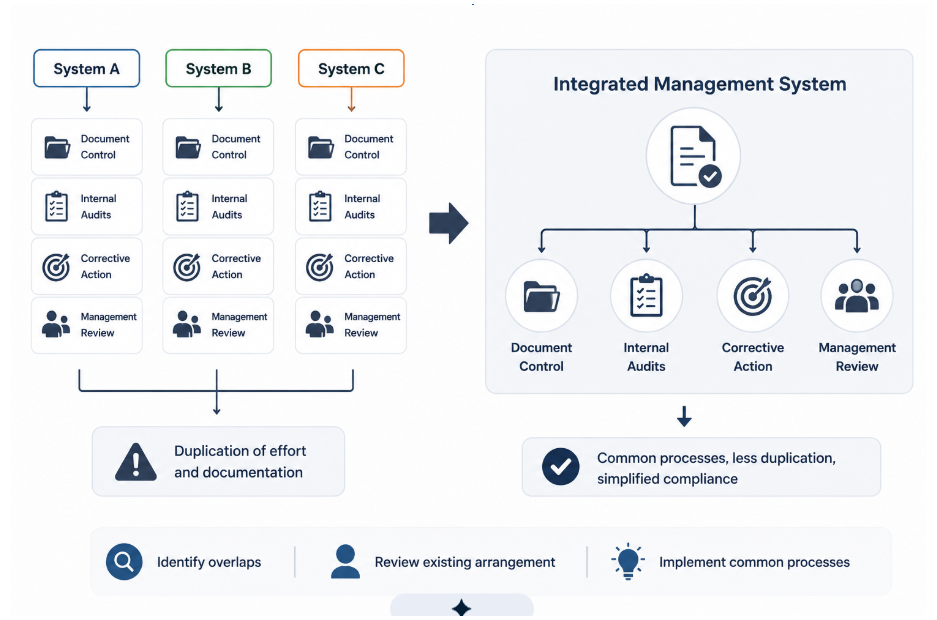
Having multiple systems at once can generate duplication of effort. Different standards might call for similar processes (e.g., document control, corrective action, internal audits, management review), but without regulation, each team may develop its own procedure and documentation.
It is possible to remove or make overlaps more effective. For example, an integrated management system in Singapore can be used to identify these overlaps. A management system compliance consultant can review the existing arrangement and determine where common processes could be implemented.
What Does an Integrated Management System in Singapore Actually Do?
An integrated system combines compatible management activities within a single structure. For example, where several standards require a business to have a document control process, a single document control process could be used. A similar shared process could also be used for corrective actions or management reviews where the requirements can be satisfied in common.
An integrated ISO consultant in Singapore can assist in evaluating what procedures can be merged and which protocols require individual controls. When setting up an ISO management standard implementation, institutions may verify whether some protocols may have been fulfilled through the current ones.
How to Implement an Integrated Management System in Singapore
First of all, the process should start by checking what the business has. Processes, documentation, responsibilities and management activities should be identified where real overlaps exist. The business can then compare those processes with the requirements that exist under each standard.
An integrated management system in Singapore should mirror the day-to-day functioning. Processes can be modified, combined or segregated according to what the operational needs and the business activities demand. A management system compliance consultant can help pinpoint gaps and put together a plan of the necessary modifications.
What Should Businesses Review Before Integration?
Before implementing the new system, organisations should examine the main areas where management activities potentially intersect:
- Management standards currently in use
- Existing policies and procedures
- Similar documents and records
- Internal audit processes
- Corrective action procedures
- Management review activities
- Roles and responsibilities
- Requirements specific to individual standards
Can Consultant and Audit Support Help?
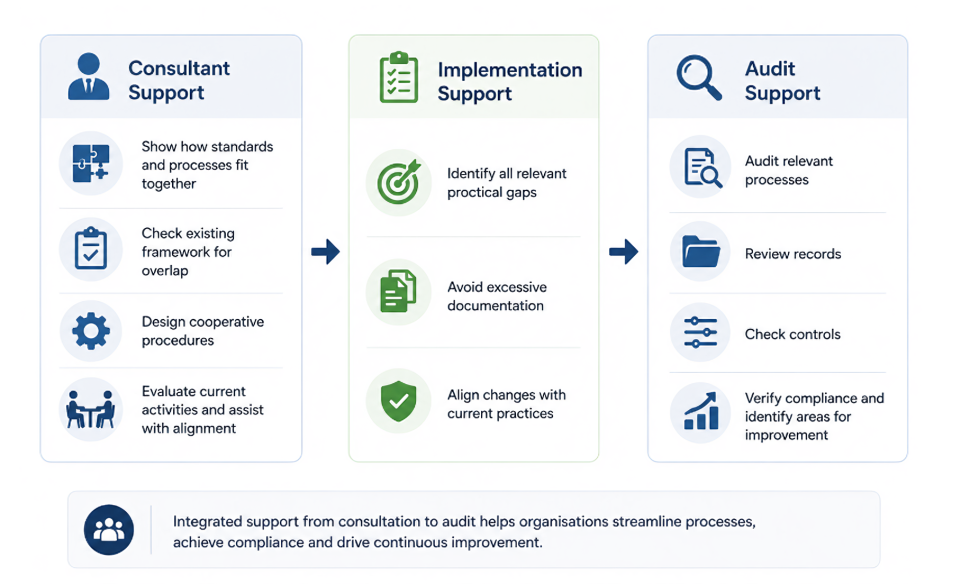
An integrated ISO consultant in Singapore can show a company how its various standards and processes fit together. They can check the existing framework to look for overlap and assist in designing cooperative procedures. We can help with this by evaluating current activities and assisting organisations to align their modifications with current practices.
The ISO management standard implementation should identify all relevant practical gaps and not produce excessive documents. Management system audit services in Singapore can then audit the relevant process, records and controls within the specified scope and help organisations verify compliance with their management system and identify areas for improvement.
Comparing Separate and Integrated Management Systems
Area | Separate Systems | Integrated System |
Similar documents | Separate documents may be maintained for similar requirements | Shared documents can be used where requirements overlap |
Internal audits | Similar processes may be audited separately | Applicable requirements can be examined within common processes |
Management reviews | Separate reviews may be conducted | Related issues may be reviewed together where appropriate |
Corrective actions | Different tracking procedures may be used | A common process may be used where applicable |
Responsibilities | Responsibilities for similar activities may be spread across separate systems | Responsibilities may be organised around shared processes |
What to Review Before Implementing an Integrated Management System
Integration is not a one-off task. Business activities, responsibilities or processes may alter the management system. An integrated management system in Singapore should be reviewed when business processes or requirements change.
Management system audit services in Singapore are available to assist you with scheduled audits of relevant areas. An integrated ISO consultant in Singapore can also provide support when organisations are introducing major system changes, or considering how various requirements continue to integrate.
How an Integrated Management System in Singapore Simplifies Compliance
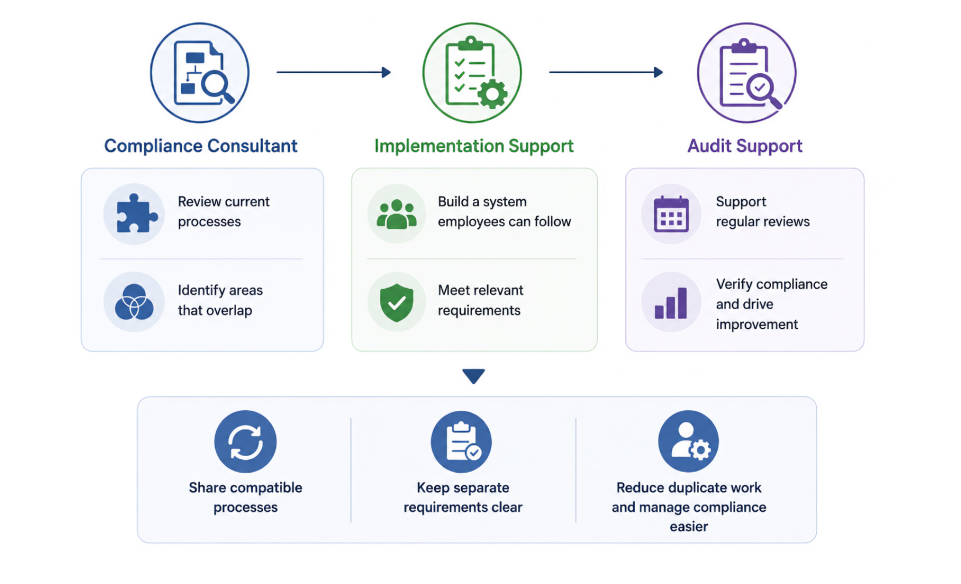
A management system compliance consultant can review your current processes and find areas that overlap. ISO management standard implementation should focus on building a system that employees can follow and that meets the relevant requirements.
Management system audit services in Singapore can support regular reviews. By sharing compatible processes and keeping separate requirements clear, businesses can reduce duplicate work and manage compliance more easily.